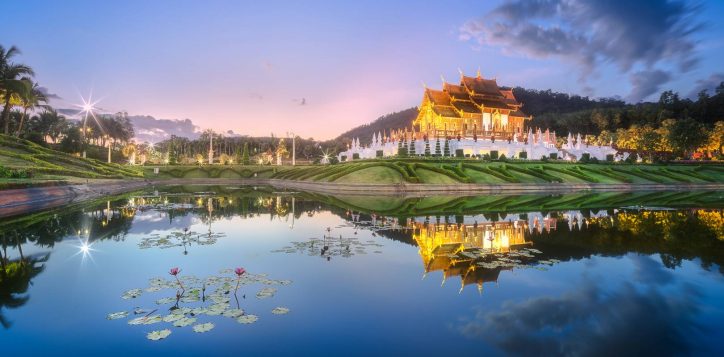
ibis Chiang Mai Nimman Journeyhub - 3 stars hotel - Things to do in Chiang Mai


Things to do in Chiang Mai
Welcome to Chiang Mai, a vibrant city tucked away in the northern Thai mountains. Get ready to uncover exciting experiences and cultural marvels. Whether you’re into ancient temples or lively markets, this magical city has something for everyone. Check out the top things to do in Chiang Mai to make the most of your visit to this captivating destination.
Chiang Mai blends 700 years of Lanna Kingdom history with a modern café and arts scene, all within reach of Thailand’s highest mountain. From the ancient gates of the Old City to the misty summit of Doi Inthanon, the city rewards exploration at any pace. ibis Chiang Mai Nimman Journeyhub on Huay Kaew Road is positioned at the edge of the Nimman district, with Chiang Mai University 500 meters away and the Old City 10 minutes by car – making it one of the most convenient bases for covering both the historic and natural highlights of the region.
Top 10 Things to Do in Chiang Mai (Update 2026)
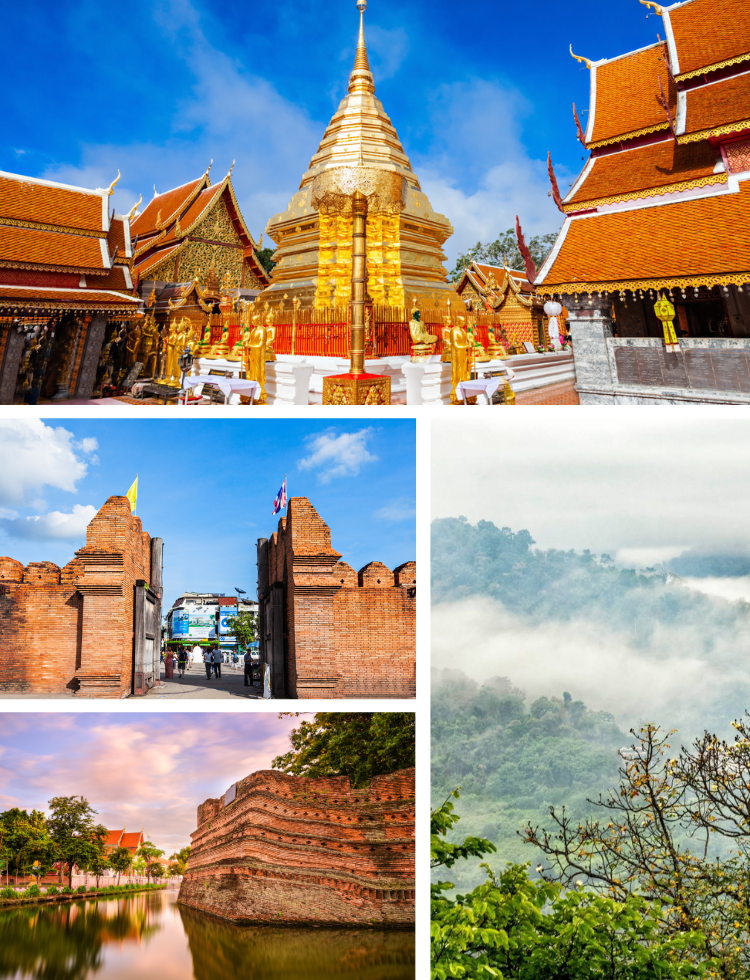
Discover the charm of Chiang Mai, a city nestled in the northern Thai mountains, boasting a fascinating mix of tradition and modern allure. Here, our guide reveals the “10 Things to Do in Chiang Mai,” providing a curated list of experiences to soak in the vibrant atmosphere.
From exploring historic temples to navigating bustling markets, join us on this enchanting journey through the city’s must-visit attractions and hidden gems that make Chiang Mai an unforgettable destination.
Tha Phae Gate
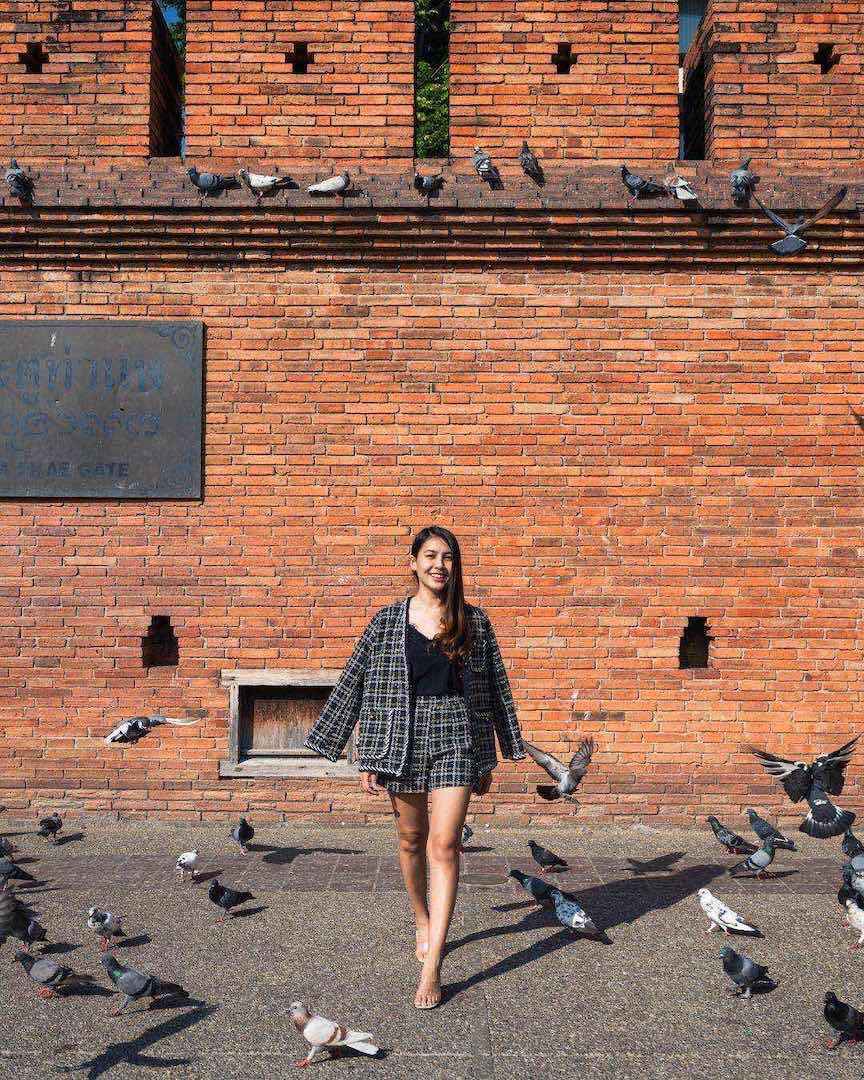
The most intact and iconic of Chiang Mai’s original four city gates, built as part of the fortified walls that once enclosed the Lanna Kingdom capital. Constructed in the 13th century and restored to its current form, the red-brick gate sits on the eastern wall of the Old City, facing toward the Ping River – ‘Tha Phae’ means ‘raft pier,’ reflecting its role as the gateway to the river trade route.
Why visit: Tha Phae Gate is the most photographed landmark in Chiang Mai and the city’s de facto central meeting point. The square in front of the gate hosts festivals, monk alms-giving ceremonies, Sunday market setup, and everyday pigeon-feeding. It’s the starting point of the Sunday Walking Street market and a natural entry point into the temple-dense Old City.
Opening hours: Open 24 hours, 7 days a week – the gate itself is always accessible
Practical tip: Best photography: 6–8am facing east for side-light on the wall with few crowds; and blue hour after sunset when the gate is illuminated. Avoid midday in March–May (haze season and intense heat). Sunday evening is the most atmospheric – the Walking Street market runs along Ratchadamnoen Road from 4pm to 10pm.
From ibis Chiang Mai: Approximately 5 km east of ibis Chiang Mai Nimman, ~10 minutes by car or red songthaew
Doi Suthep – Wat Phra That Doi Suthep Temple
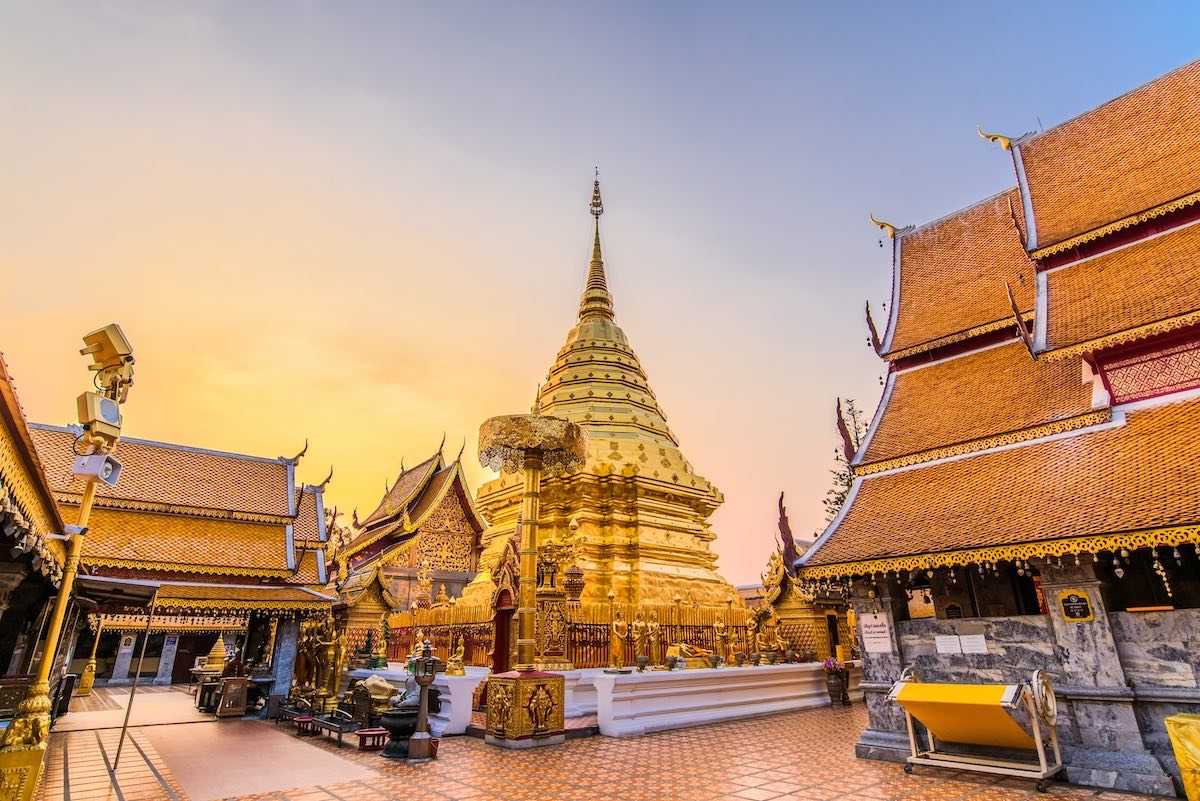
Wat Phra That Doi Suthep is a Theravada Buddhist temple perched at 1,053 meters on the slopes of Doi Suthep mountain, 20 km northwest of Chiang Mai city. Founded in the 14th century, the temple contains a sacred golden chedi (24m tall) believed to enshrine a relic of the Buddha. Visitors climb 309 steps up the ceremonial Naga staircase – or take the funicular – to reach the temple complex, which offers panoramic views over Chiang Mai city on clear days.
Why visit: Wat Phra That Doi Suthep is the most visited temple in northern Thailand and a pilgrimage site for Thai Buddhists. It is the city’s most recognizable skyline landmark (visible from Nimman on clear days) and offers the most dramatic viewpoint over Chiang Mai. The combination of religious significance, architecture, mountain scenery, and city views makes it the single highest-priority excursion from Chiang Mai for most visitors.
Practical tip: Go early – arrive by 7am to beat tour groups and morning haze. Dress code is strict: shoulders and knees must be covered; sarongs available at the entrance. Drones are not permitted. The road can be congested with tour buses 9am–2pm. Red songthaews depart from near CMU on Huay Kaew Road toward Doi Suthep. Best mountain visibility from the city: November–February (cool season). March–May haze can obscure views significantly.
Opening hours: Daily 6:00 AM – 8:00 PM
From ibis Chiang Mai: Approximately 20 km from ibis Chiang Mai Nimman, ~20–25 minutes by car.
Ang Kaew Reservoir – Chiang Mai University
Ang Kaew is a man-made reservoir built in 1964 as the water supply for Chiang Mai University (CMU), the premier university of northern Thailand. The reservoir is set within the forested CMU campus with Doi Suthep as its mountain backdrop. A flat paved path circles the lake, making it popular for morning joggers, walkers, and cyclists. Multiple cafés operate on the lakeside, and the calm water reflects the surrounding trees and mountains.
Why visit: Ang Kaew is the closest nature escape from the Nimman area – walkable from ibis Chiang Mai. It offers a tranquil contrast to the city’s temple circuit: open green space, mountain views, birdwatching, and the peaceful CMU campus environment. The reservoir is particularly beautiful at sunrise (mist over water) and sunset. It is free, uncrowded outside of weekday morning rush hours, and one of the most underrated spots in Chiang Mai for independent travelers who want to escape the tourist trail.
Opening hours: Daily 5:00 AM – 10:00 PM (university campus access hours). Best time: weekday mornings 6–8am or weekends 7–9am.
Practical tip: Bring a camera for early morning mist photography. The ‘Living the Dream’ café on the lakeside is a popular stop for coffee. CMU operates a campus shuttle bus for students – tourists can walk or enter by car/Grab. The university’s main entrance is on Huay Kaew Road. The paved loop around the reservoir takes approximately 30–45 minutes at walking pace.
From ibis Chiang Mai: Approximately 1 km from ibis Chiang Mai Nimman – 12-minute walk along Huay Kaew Road.
Doi Inthanon National Park – Thailand’s Highest Peak
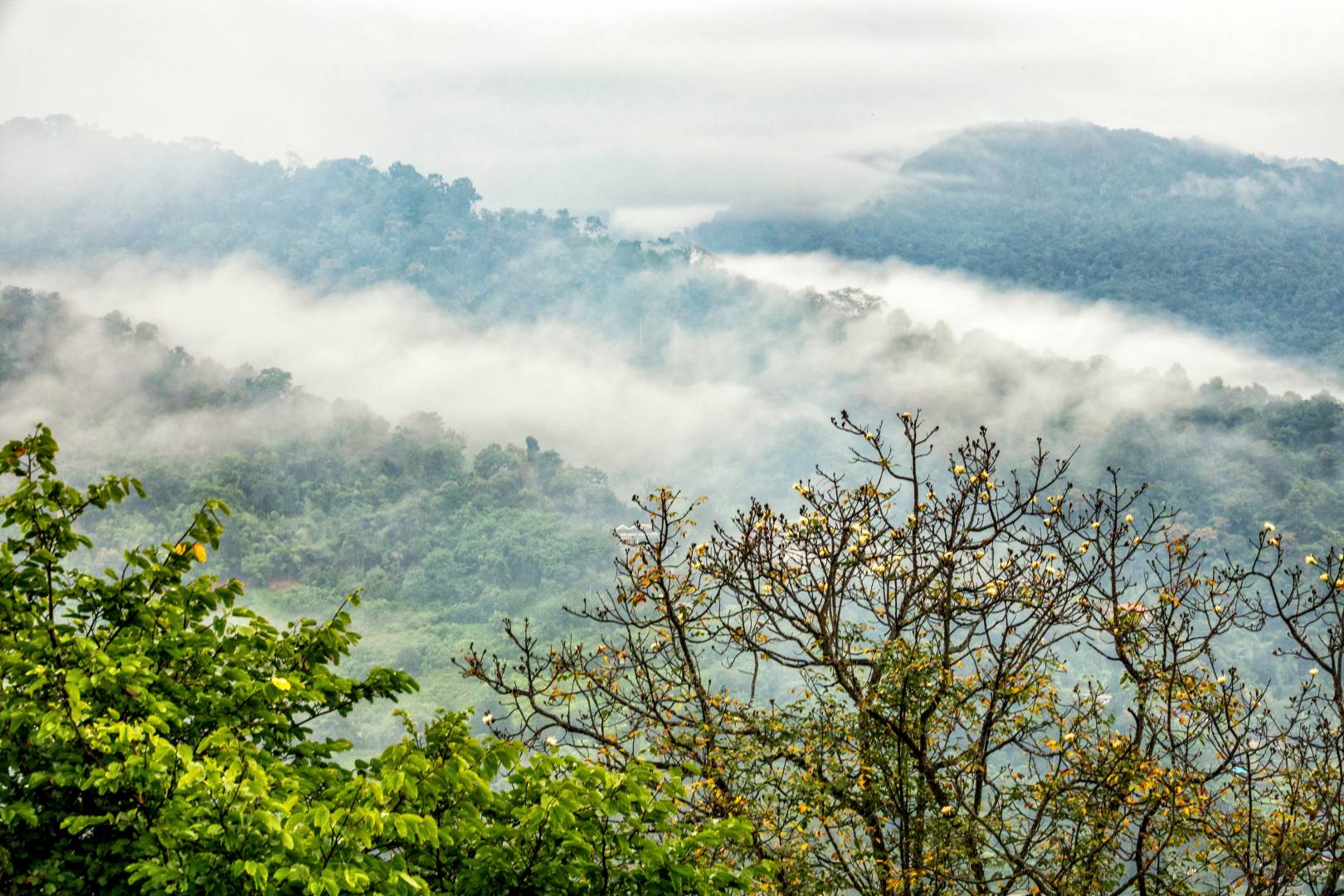
Doi Inthanon National Park is a must-visit destination while in Chiang Mai. This stunning park is home to the highest mountain in Thailand, Doi Inthanon, which offers awe-inspiring views of the surrounding lush forests and waterfalls.
Furthermore, visitors can immerse themselves in nature by trekking through lush cloud forests, exploring remote hill-tribe villages, and marveling at the spectacular temples near the summit of Doi Inthanon—Thailand’s highest peak.
Open Daily: From 5:30 AM to 6:30 PM year-round
Practical tip: Doi Inthanon is a full-day trip – depart by 7 AM from Chiang Mai to arrive at the summit before midday crowds. Bring a light jacket or warm layer – the summit can be as cool as 10°C even in summer and can drop below 5°C in December–January. November to February is the best season: cool, clear, with winter flowering plants. Rainy season (June–September) brings lush green scenery but also road closures and trail restrictions. Rent a car or join a tour – public transport requires multiple connections and takes 3+ hours. Guided tours from Chiang Mai typically run 6am–6pm and include transport, entry, and selected stops.
From ibis Chiang Mai: Approximately 90 km southwest of ibis Chiang Mai Nimman, ~1.5–2 hours by car.
Wat Chet Yot (Wat Photharam Maha Vihara) – Temple of Seven Spires
Wat Chet Yot (‘Seven Spires’) is a 15th-century Buddhist temple formally named Wat Photharam Maha Vihara. Built in 1455 under King Tilokkarat of the Lanna Kingdom, it is modeled on the Mahabodhi Temple in Bodh Gaya, India – the site of the Buddha’s enlightenment. The temple’s seven chedis represent the seven weeks the Buddha spent meditating under the Bodhi tree. In 1477, the temple hosted the Eighth World Buddhist Council, where the Pali Canon (the scriptures of Theravada Buddhism) was revised and standardized – one of the most historically significant Buddhist events in Southeast Asian history.
Why visit: Wat Chet Yot is architecturally unique in Chiang Mai – its Indian-influenced design, stucco Bodhisattva reliefs, and historical connection to the Eighth World Buddhist Council set it apart from the more heavily visited Old City temples. It is quiet, rarely crowded, and offers a more contemplative temple experience than the tour-bus-heavy sites. The temple is within easy distance of the Nimman district and makes an excellent half-hour stop when combined with a CMU and Ang Kaew visit.
Opening hours: Daily 6:00 AM – 6:00 PM (some sources note 7:00 AM opening – arrive after 7am to be certain)
Practical tip: Located on the Superhighway (Route 11) near Chiang Mai University – the road is busy, so arrive by Grab, tuk-tuk, or songthaew rather than on foot. Dress modestly: shoulders and knees covered. The temple is compact and can be explored in 20–30 minutes. It pairs well with Ang Kaew Reservoir (1.4 km away) and CMU for a half-day Nimman-area cultural loop.
From ibis Chiang Mai: Approximately 1.4 km from ibis Chiang Mai Nimman, ~5 minutes by car or tuk-tuk
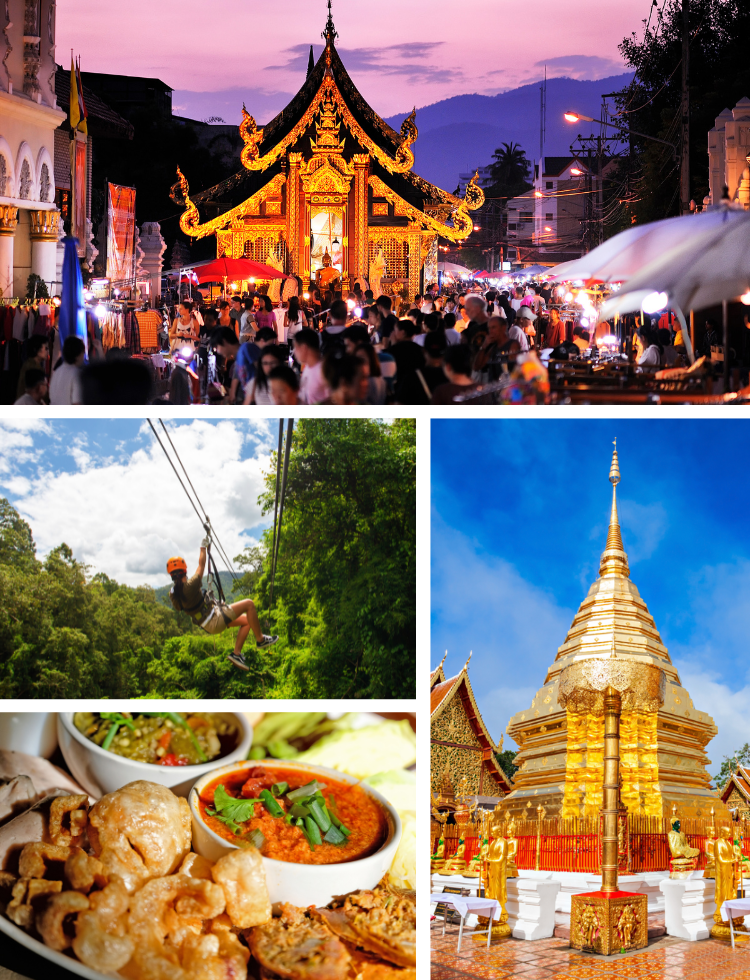
Best Activities to Do in Chiang Mai 2026
Bike Around the Old City
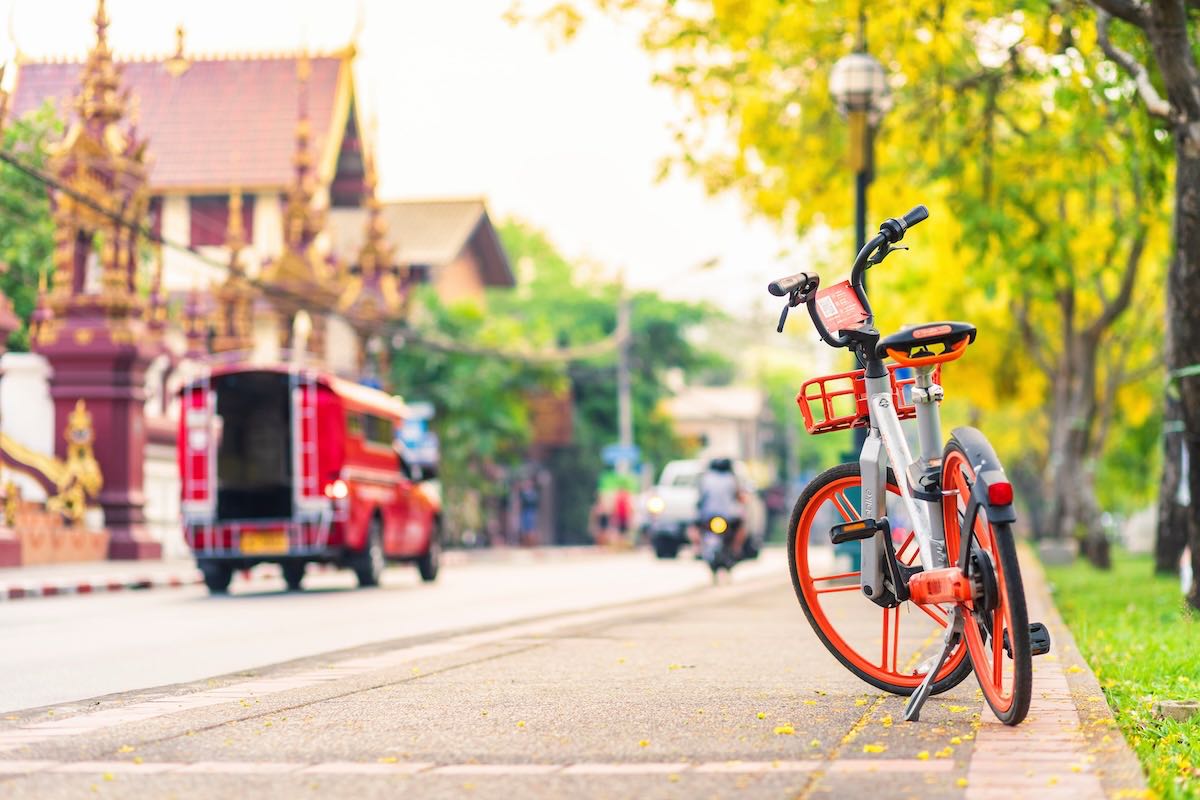
Chiang Mai’s Old City (within the moat) is flat, compact – approximately 1.5 km × 1.5 km – and dense with temples, street food, and historic Lanna architecture. Exploring by bicycle is the most efficient and enjoyable way to cover the Old City at your own pace. The interior roads are narrow and traffic is lighter than surrounding streets.
Why do it: Chiang Mai has over 30 temples inside the Old City moat. On a bicycle, you can combine Wat Chedi Luang (THB 40), Wat Phra Singh (free), and Wat Inthakin in a single morning loop that would take twice as long on foot and cost far more by tuk-tuk.
When: Early morning (6–9am) before heat and traffic – temples open from 6am, streets are quiet, light is best for photography
Route tip: Start at Tha Phae Gate, loop counterclockwise: Wat Chedi Luang → Wat Phra Singh → Wat Chet Lin → Wat Lok Moli → back to gate. Full loop approximately 5 km.
From ibis Chiang Mai: Red songthaew to Tha Phae Gate, rent a bicycle there. Alternatively, rent from a shop in the Nimman area and cycle to the Old City – approximately 5 km.
Café Hopping on Nimmanhaemin Road
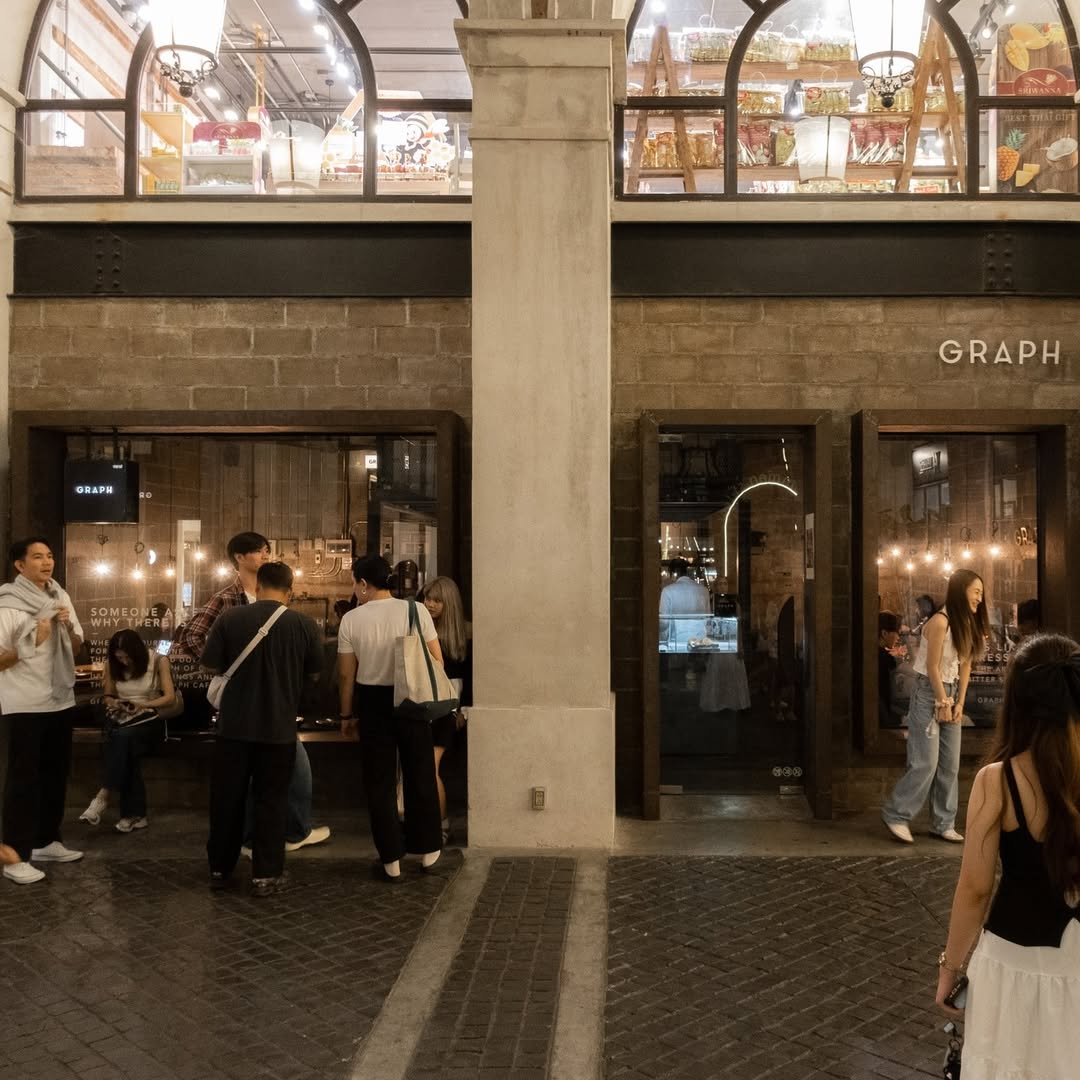
Nimmanhaemin Road (Nimman Road) is Chiang Mai’s café-culture hub – a 15-soi (lane) grid of specialty coffee shops, artisan bakeries, creative restaurants, and independent boutiques. The area is adjacent to Chiang Mai University and has developed over the past decade into one of Southeast Asia’s most distinctive café districts. Chiang Mai has one of the highest concentrations of specialty coffee roasters and third-wave cafés in Thailand.
Why do it: The Nimman café scene is genuinely distinct – many roasters work directly with northern Thai hill tribe coffee farmers (Doi Chaang, Akha Ama, Mae Wang) and serve single-origin beans at prices far below Bangkok or international equivalents. It’s also a working neighborhood, not a tourist construct.
When: Morning to afternoon; most cafés open 7–8am and close by 8–10pm. Nimman is busiest on weekends but functions daily.
Recommended stops: Ristr8to Lab (Nimman Soi 3, espresso-focused, highly cited), Akha Ama Coffee (Soi 3, hill tribe sourced), Graph Table (specialty tea and coffee), Nimmanhaemin Soi 9 cluster
From ibis Chiang Mai: ibis is on Huay Kaew Road at the northern edge of the Nimman area. Nimmanhaemin Road is 700 meters south – 8–10 minute walk. Ristr8to Lab is approximately 0.5 km from the hotel.
Thai Cooking Class
Chiang Mai is considered the best city in Thailand for taking a Thai cooking class. The combination of a large culinary school ecosystem, proximity to fresh markets, lower prices than Bangkok, and a distinct northern Thai food tradition (khao soi, sai oua, gaeng hang lay) makes it the go-to destination for hands-on food education.
Why do it: Northern Thai cuisine differs significantly from central Thai dishes. A Chiang Mai cooking class teaches you dishes you can’t easily learn elsewhere – khao soi (coconut curry noodle soup, the regional signature) and nam prik noom (green chili dip). Most classes include a market visit to source ingredients.
Typical format: Half-day (3–4 hours) or full-day (6–7 hours). Most classes include hotel pickup, a morning market tour, hands-on cooking of 4–6 dishes, and a sit-down meal. Prices: THB 1,000–1,800 per person for half-day, THB 1,500–2,500 for full-day.
When: Morning sessions: 8:30–9am departure, ending by 1pm. Afternoon sessions: 3–8pm. Morning is preferred – markets are at their freshest.
Booking tip: Book 1–2 days in advance in peak season (November–February). Most operators offer hotel pickup – confirm pickup from Huay Kaew Road when booking.
Street Food at Chiang Mai Night Bazaar
Chiang Mai Night Bazaar is the city’s largest and most consistent nightly market, running along Chang Khlan Road for approximately 1 km. Active since the 1970s on the historic Yunnan caravan trade route, the market operates 365 days a year. During the day, Chang Khlan Road is a regular commercial street; from 6 pm, vendors set up stalls across the footpaths and a central food court fills with Thai street food, grilled meats, mango sticky rice, fresh fruit smoothies, and northern Thai specialties.
Why visit: The Night Bazaar combines shopping (silk, silver, woodcarvings, clothing) with some of the most accessible street food in Chiang Mai for visitors. The main food court has 20+ stalls with seating, and the surrounding streets have smaller local-facing food vendors with lower prices. Unlike the Sunday Walking Street, it operates every night.
Opening hours: Daily from approximately 6:00 PM; most active 7:00–10:30 PM; food stalls begin packing up around 10:30–11:00 PM. Some stalls stay past midnight.
What to eat: Pad Thai (THB 60–80), Mango Sticky Rice (THB 50–70), Khao Soi (northern curry noodles, THB 60–80), grilled corn, satay skewers, fresh fruit with chili salt
Practical tip: Prices at the Night Bazaar are tourist-priced and higher than local markets – expect to haggle on goods. Food stalls are fixed-price. For more authentic street food, the Chang Phuak Gate Night Market (north gate) is favored by locals and is open the same hours.
From ibis Chiang Mai: 7 km east, approximately 20 minutes by car or red songthaew. Night Bazaar tourist attraction, 7 km / 20 min drive.
Delhi Street – Authentic Indian Street Food at ibis Chiang Mai
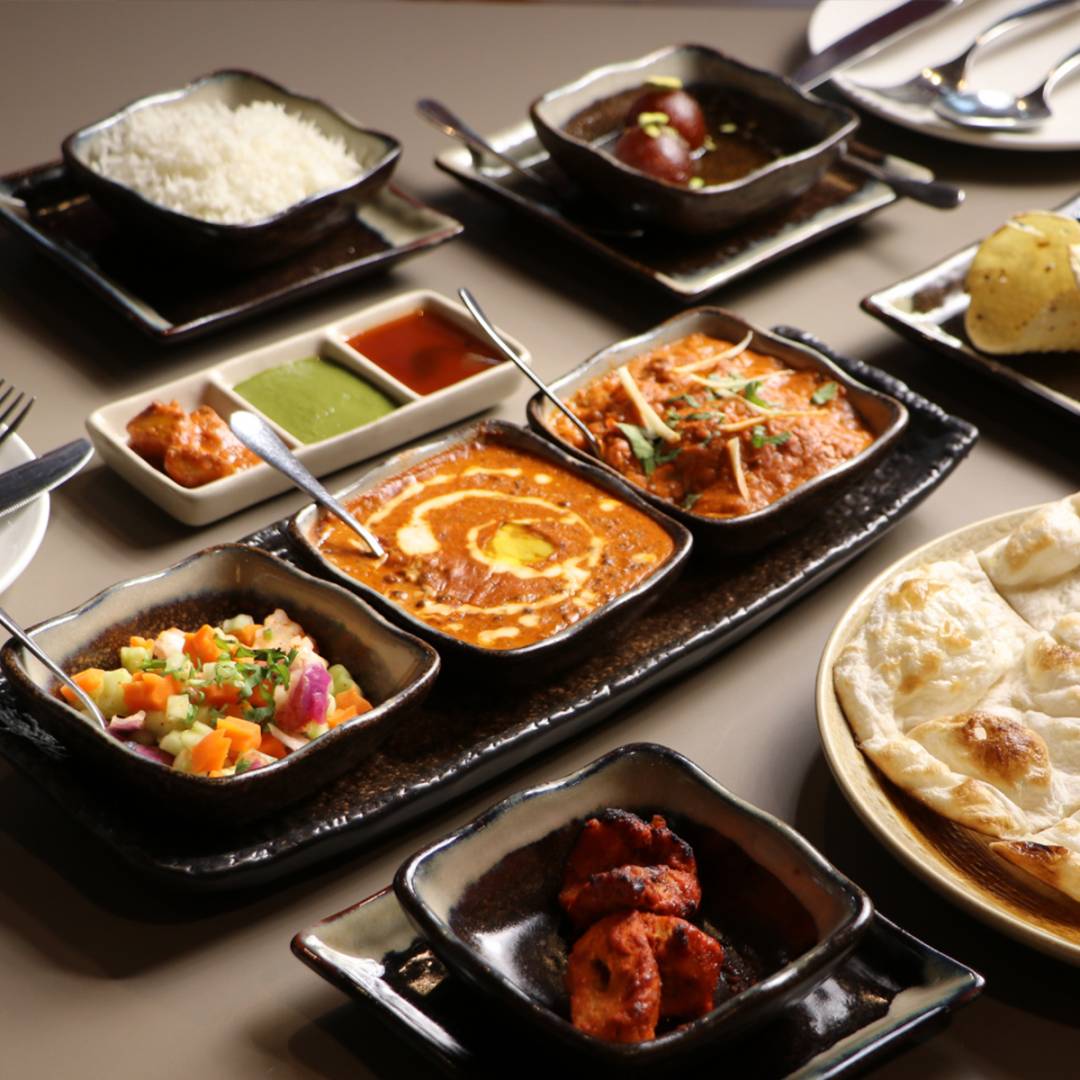
Delhi Street is ibis Chiang Mai Nimman Journeyhub’s in-house Indian restaurant, serving authentic North Indian street food and classic curry dishes in the Nimman district. Launched in 2025, it is one of the few dedicated Indian restaurants in Chiang Mai and is conveniently located on-property for hotel guests.
Why visit: Indian food options in Chiang Mai are limited compared to Bangkok. Delhi Street brings North Indian street food staples – pani puri, butter chicken, biryani, tandoori – to the Nimman district at accessible prices. The monthly ‘Delhi Meets The World’ fusion series introduces seasonal menus pairing Indian and other regional cuisines.
Location: Inside ibis Chiang Mai Nimman Journeyhub
Price: Dishes from THB 99++. Vegan set menu from THB 150++. Full menu available daily.
Menu highlights: Pani puri, butter chicken, chicken tikka, biryani, palak paneer, naan. Vegetarian and vegan options available.
Booking: Walk-in at the hotel. Reservations: +66 52 004 700 or HB9U9@accor.com
Best Chiang Mai Nightlife and Evening Activities
Zoe in Yellow – Chiang Mai’s Most Famous Nightlife Complex
Zoe in Yellow is an open-air bar complex inside the Old City moat, widely recognized as the most popular gathering point for international visitors in Chiang Mai’s nightlife. The complex clusters a dozen small bars and a central courtyard, with DJs playing electronic music, hip-hop, and pop. Cheap drinks, an international crowd, and a no-fuss atmosphere make it the standard first stop on any Chiang Mai night out.
Vibe: Young, international, backpacker-heavy. Loud. Good for meeting people and dancing. Adjacent bars (48 Garage, Roots Rock Reggae) spill into the same street.
Opening hours: Daily 6:00 PM – 12:00 AM (midnight – licensing law, closes strictly)
After Zoe: When Zoe closes at midnight, crowds move to Spicy Club or Sound Up for late-night continuation
Practical tip: Arrive before 11pm for a seat. It gets packed after 11pm.
From ibis Chiang Mai: Old City, approximately 5 km. 10–15 minutes by Grab
North Gate Jazz Co-Op – Live Jazz Nightly
North Gate Jazz Co-Op is a small, legendary live music bar near Chang Phueak Gate (the north gate of the Old City). It hosts nightly jazz sessions featuring rotating musicians – locals, expats, and visiting players – in a casual, communal setting. Crowds spill onto the sidewalk most evenings. It is the antidote to the louder bar scene: unpretentious, musically serious, and genuinely beloved by residents and long-term visitors.
Vibe: Relaxed, older crowd, mixed Thai and international, music-focused. Significantly less noisy than Zoe in Yellow. Good for conversation.
Opening hours: Nightly from approximately 9:00 PM. Jazz sessions start around 9:30–10:00 PM.
Practical tip: Arrive by 7:30–8:00 PM on busy nights to get a seat or a table – it fills quickly after 9pm. Standing room only on weekends. Cash preferred.
From ibis Chiang Mai: Near Chang Phueak Gate (north Old City), approximately 4 km. 10 minutes by Grab.
Warm Up Café – Nimman’s Local Night Venue
Warm Up Café has been a fixture of the Nimmanhaemin nightlife scene since 1999. Popular with Chiang Mai University students, local professionals, and digital nomads, it offers a table-service format with live Thai bands followed by a DJ set. The venue is large, well-lit relative to most clubs, and structured around groups buying a bottle for the table. It represents the local Thai nightlife experience in Nimman more authentically than the tourist-oriented Old City scene.
Vibe: Local-heavy, Thai university students, some expats and international visitors. Live music then DJ. Bottle-service table layout.
Opening hours: Daily 7:00 PM – 2:40 AM
From ibis Chiang Mai: On Nimmanhaemin Road, approximately 700 meters south of the hotel. 10-minute walk or 3-minute Grab.
Practical tip: If you prefer to stand and drink rather than sit at a table, arrive early for bar spots. Peak: 11pm–1am.
Sunday Walking Street – Old City Night Market (Sundays Only)
The Sunday Walking Street (also called Tha Phae Walking Street) is Chiang Mai’s most atmospheric weekly market, transforming Ratchadamnoen Road and Prapoklao Road inside the Old City every Sunday evening. The market stretches from Tha Phae Gate west along the old city spine, with hundreds of stalls selling handmade crafts, textiles, paintings, ceramics, street food, and live music performances. Unlike the Night Bazaar, the Sunday Walking Street is known for locally made, artisan products.
Why go: The Sunday Walking Street captures Chiang Mai’s creative and cultural identity more than any other market. Products are largely handmade; prices are negotiable; and the live music performances scattered along the route (folk, traditional Thai, contemporary) are free. It’s the best single nighttime event in Chiang Mai for first-time visitors.
Opening hours: Sundays only, 4:00 PM – 10:00 PM (stalls set up from 3:00 PM)
Location: Ratchadamnoen Road, inside the Old City moat, starting at Tha Phae Gate
Practical tip: Go between 5–8 PM for the best energy. By 9:30 pm, stalls begin packing up. Bring cash – very few vendors accept cards. The Sunday market is not the same as the Saturday Night Market (Wua Lai Road, south gate) – both are worth visiting if you’re in Chiang Mai mid-week to weekend.
From ibis Chiang Mai: Approximately 5 km. 10–15 minutes by Grab or red songthaew (THB 20–40 per person, say ‘Tha Phae Gate’).
ibis Chiang Mai Nimman Journeyhub ☆☆☆☆
7-17 Moo 2, Huay Kaew Road, Chang Phueak, Muang, 50300 Chiang Mai
Thailand
Tel. +6652 004 700
HB9U9@accor.com